


 English
 Français

Hook and loop fasteners are two-component mechanical closures formed by a hook tape and a loop tape that lock together when pressed. Selection determines most of the service life: match the material, hook type, strength, and operating environment at the specification stage, and the fastener will survive years of use. If you choose the wrong combination, no amount of maintenance will save it. If you choose correctly, a simple cleaning routine is all the care it needs.
How to Select the Right Hook and Loop Fastener
Four decisions matter more than anything else when specifying a hook and loop fastener: base material, hook construction, load capacity, and operating environment. Work through them in that order, and the right product appears quickly.
Choose the Base Material According to the Use Case
Fiber type determines strength, weather resistance, and cost, so it is the first decision to make. The three practical options are nylon, polyester, and blended tape, and each answers a different set of conditions.
- Nylon delivers high tensile strength, good elastic recovery, and strong abrasion resistance, which makes it the default for garments, bags, and industrial closures.
- Polyester resists moisture, UV light, and chemical exposure better than nylon, so it is the safer choice for outdoor furniture, marine covers, and awning applications.
- Blended tape sits between the two in cost and performance, and it suits consumer goods with moderate requirements.
For most indoor general-purpose uses, the all-nylon hook and loop remains the most cost-effective option. Specify polyester only when sunlight or moisture is a real part of the product life.
| Material | Strength | UV resistance | Moisture behavior | Typical applications |
|---|---|---|---|---|
| Nylon | High | Low to moderate | Absorbs moisture | Apparel, bags, industrial fastening |
| Polyester | Moderate to high | High | Low absorption | Outdoor furniture, marine, patio |
| Blended | Moderate | Moderate | Moderate | Consumer goods, general sealing |
Match the Hook Type to the Performance Requirement
Hook construction sets the upper limit of holding force. For light closures, a woven textile hook is enough; for products that carry real load or open hundreds of times, an injection-molded hook is the reliable choice.
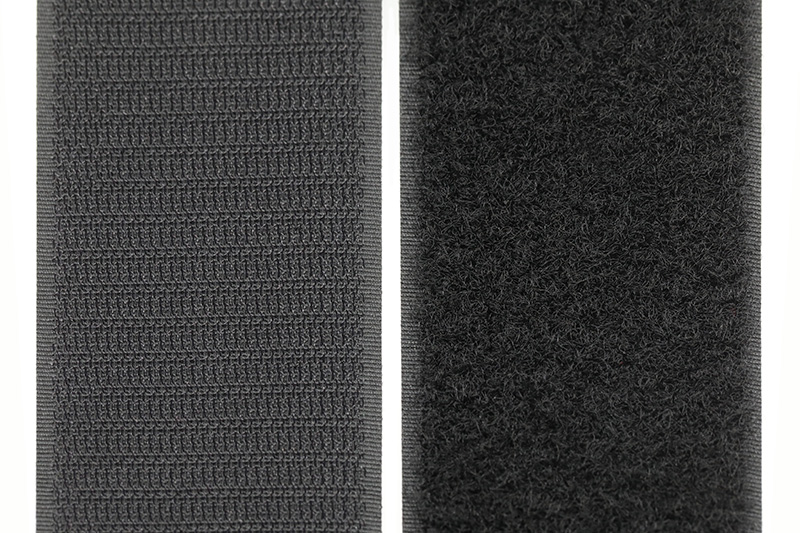
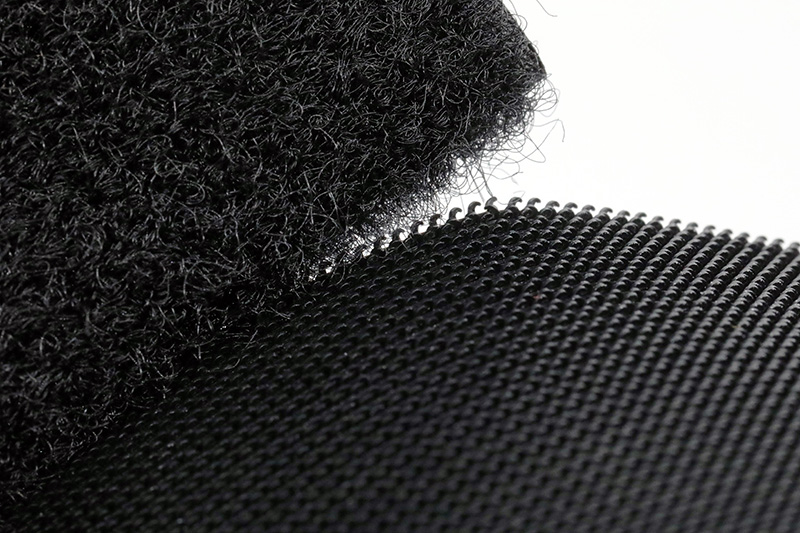
Woven textile hooks are produced on looms as monofilament tape that stays flat and flexible. They engage softly with the loop side, run quietly, and suit clothing, accessories, and medical products. Injection-molded hooks are formed as rigid stems on a film carrier. They bite into the loop tape more aggressively and deliver two to five times the peel and shear values of textile hooks on the same loop material.
Where a closure must stay locked under sustained load, an option such as the VZ-35 nylon injection extra-strong hook and loop is the appropriate upgrade. The technical nuances of designing and processing these parts are covered in our technical guide for PP and nylon injection molded hooks.
Assess Peel Strength, Shear Strength, and Cycle Life
Three numbers define performance, and you should see them on the supplier's data sheet before ordering. Peel strength is the force per unit width needed to separate the fastener with a 180-degree pull; typical textile grades offer 1.5-3 N/cm, while molded grades reach 5-10 N/cm. Shear strength resists sliding along the plane of the closure and matters when the fastener supports weight. Cycle life is the number of open-close operations before grip decays noticeably; quality textile products hold up for several thousand cycles, and molded products go far beyond that.
Suppliers with in-house test equipment, such as peel-shear testers and fatigue testers, can back these numbers with batch records. Ask for test reports before you commit.
Evaluate the Operating Environment
Environment rules out materials faster than any other factor. High sustained temperature, UV radiation, flame-retardance requirements, and chemical contact each shift the specification. Nylon begins to soften above roughly 120°C and becomes brittle after long UV exposure; polyester resists both conditions better. When fire-safety standards apply to public seating, aviation interiors, or military equipment, choose flame-retardant nylon hook and loop instead of standard tape.
Decide the Fixing Method: Sew-On, Self-Adhesive, or Weldable
The fixing method determines both installation cost and long-term reliability. Sew-on is the strongest option on fabric because stitching distributes peel stress along the seam. Self-adhesive backing suits smooth rigid surfaces such as plastic housings or painted panels, though heat can soften the adhesive. Weldable hook and loop, joined by high-frequency welding or molding, eliminates adhesive failure and is ideal for industrial and automotive products.
Size the Width and Length Correctly
Width is the main lever for increasing holding capacity. A 20 mm textile tape handles roughly 2-3 kg of vertical load, while a 5 kg load normally needs 25 mm or 30 mm width to avoid edge-peel failure. Longer engagement improves shear, so use the full product length rather than small coins or dots when the joint is load-bearing. Custom slitting is available across the textile hook and loop range.
Hook and Loop Maintenance and Care
Most grip loss is not material degradation but debris: fibers, dust, and hair lodge between the hooks and stop the two sides from engaging. Cleaning restores function in most cases, and the process takes only a few minutes.
Brush the Hook Side to Remove Debris
Routine maintenance means brushing, not washing. Use a fine-toothed comb or a stiff nylon brush and work in the direction of the hook stems to lift trapped fibers. For sticky particles, use an old toothbrush with a little soapy water, then rinse clean and air dry. Avoid wire brushes; bent hooks never recover, and the fastener loses grip permanently.
Wash Smartly if the Product Is Washable
Washing is not the first choice for extending fastener life, but it is often necessary for garments and reusable products. Close the hook and loop before washing so the hooks do not catch other fabrics. Use cold or warm water at or below 40°C, skip fabric softeners and chlorine bleach, and air dry or tumble dry on low. After drying, brush the hook side once to realign the hooks.
Recognize the Three Signs of True Wear
Cleaning cannot fix a worn fastener. Replace it when the hooks are visibly flattened or broken, when the loop pile has shed and no longer offers anchor points, or when the adhesive backing has lifted from the substrate. A quick hand-peel test against a fresh section of loop is enough to judge.
Store and Handle to Protect the Fastener
Unmated hook tape is a debris magnet. Store rolls or cut strips with the hook face mated to the loop face or covered with a release liner, and keep them in a dry, dust-free area below 50°C. In production converting, this simple step avoids the majority of quality complaints.
Common Selection and Care Mistakes to Avoid
Most premature failures come from a short list of repeat mistakes. Check your specification against these points before you order.
- Choosing nylon for a UV-exposed outdoor application, then seeing brittle failure after a few months.
- Buying on price without checking cycle life; low-cost tapes often lose hold within a few hundred cycles.
- Using tape that is too narrow for the load, causing edge-peel failure long before the material wears out.
- Washing hook and loop with the hooks exposed, letting lint and hair pack into the hook field.
- Skipping certification checks such as flame retardancy for public seating.
Frequently Asked Questions
How do hook and loop fasteners work?
One tape carries tiny hooks, and the other carries soft loops. Pressing the two together lets the hooks catch the loop fibers and creates a strong yet reversible mechanical bond.
Can hook and loop fasteners be washed?
Yes, in most cases. Close the fastener, wash at or below 40°C, avoid fabric softener and bleach, and brush the hook side once it is dry.
Which side is the hook side?
The hook side is the stiffer tape with a visibly hooked texture under close inspection; the loop side is the soft, fuzzy tape. The hook side normally feels rougher to the touch.
How do I make a weakened fastener grip better?
Start by cleaning the hooks with a fine-toothed comb; trapped debris is the most common cause of weak grip. If the loop pile has flattened, lift it with a nylon brush. If grip still does not return, move to a wider tape or an injection-molded hook with higher shear strength.
Are there flame-retardant hook and loop fasteners?
Yes. Flame-retardant nylon hook and loop is produced with specially formulated fiber chemistry so it passes standard vertical burn tests, and it is commonly used in public seating, aviation, and military gear. Specify this type whenever fire-safety requirements apply.
Hook and Loop Supply Should Come with Engineering Support
Selection and maintenance are both easier when the supplier contributes real technical data. VEEZOT is a hook and loop fastener manufacturer with three production bases in Zhejiang, Sichuan, and Guangdong, in-house dyeing and finishing lines, and testing equipment for peel strength, shear strength, fatigue, and temperature performance. For specifiers, that means verified specifications, custom slitting, and consistent quality batch after batch.



