


 English
 Français


Mushroom velcro is a touch fastener in which one side carries thousands of tiny molded stems capped with mushroom-shaped heads instead of open hooks. Those caps grip loops or loose fibres, hold firmly when the joint is loaded sideways, and separate with a soft tear rather than a sharp rip. If you are specifying a closure on knitwear, upholstery, wearables or a product where the sound of opening is noticed by the user, that geometry change is the entire reason to shortlist it.
The short version: expect a gentler release, less fibre damage and quieter opening, with peel strength that is usually lower than an aggressive hook and shear strength that is often comparable. What follows explains the mechanism, the trade-offs, and the numbers to lock down before you pay for tooling.
What Mushroom Velcro Actually Is
Mushroom velcro keeps the same two-part architecture as conventional hook and loop and changes only the gripping element. A standard hook tape uses monofilament hooks bent into a J shape; a mushroom tape uses straighter molded stems whose tips are rounded or flattened into a cap.
Most mushroom-head tapes are injection molded or extruded from polypropylene, polyethylene or nylon. Stem height, stem density and cap diameter decide almost everything about how the closure behaves, which is why two samples that look identical under a lens can feel completely different in the hand. A taller, denser stem with a wider cap grips harder but feels stiffer and needs more peel force to open.
The geometry came out of biomimicry research, where microscopic mushroom-shaped pillars were fabricated and tested against conventional hooks. The finding that matters for buyers is consistent: the caps held well, yet released fibres gently, producing less noise and less surface damage than a hook. Commercial molded mushroom tapes exploit exactly that behaviour.
One clarification worth making early. Mushroom-head products come in two families. Loop-engaging mushroom tape grips a nonwoven or tricot loop, while self-mating mushroom tape grips a second mushroom tape with no loop at all. The two are not interchangeable, and confusing them is one of the more common sourcing errors. If you are matching a loop side to a new mushroom head, it helps to compare against the standard constructions in our textile hook and loop range before you commit to a sample run.
How the Head Engages and Releases
Engagement happens by deflection, not by snagging. As the two sides are pressed together, the rounded cap pushes loops aside; when the pressure is released, the loops spring back behind the cap and the joint locks. Load applied sideways is carried by thousands of small caps bearing on loops, which is why shear performance stays high even though the closure feels soft.
Release is where the difference shows. When you peel a hook tape, the hooks either drag fibres out of the loop or snap off themselves, and both events are noisy. A capped stem slides out more gradually, so the loops straighten instead of breaking. That is why mushroom closures feel softer, leave less lint on fine-gauge knits and sound different in use.
| Feature | Standard hook tape | Mushroom-head tape |
|---|---|---|
| Gripping element | Bent monofilament hooks in an open J shape | Straight molded stems with rounded or flattened caps |
| Holding action | Hooks trap individual loops and fibres | Caps deflect loops aside and loops close behind them |
| Peel feel | Sharp, loud rip with high initial resistance | Progressive release, softer and quieter |
| Shear strength | High on a matched loop | High, often close to hook performance on the same loop |
| Effect on fine knits | Can pull yarns, raise fuzz and shed lint | Markedly lower fibre breakage on knits and fleece |
| Repeated opening | Hooks deform or snap; loops fuzz up quickly | Caps wear more slowly, but grab drops if the surface is dusty |
| Tooling and setup | Wide availability, low tooling cost | Mold or extrusion tooling, higher setup cost |
| Mating side | Standard nonwoven or tricot loop | Loop for loop-engaging grades; second mushroom tape for self-mating grades |
Mushroom Velcro vs Standard Hook and Loop
Choose mushroom-head tape when the surface is delicate, the opening should be quiet, or the closure will be cycled many times; choose a conventional hook when maximum peel grab on a cheap nonwoven is the priority. Nothing else about the two systems differs, so the decision is usually driven by the fabric and the user experience rather than by strength alone.
| Situation | Recommended side | Reason |
|---|---|---|
| Fine-gauge knit, fleece or brushed fabric | Mushroom head | Caps slip over fibres instead of tearing them loose |
| Quiet opening in wearables or seating | Mushroom head | Release is progressive rather than a sharp rip |
| Maximum peel grab on low-cost nonwoven | Standard hook | Open hooks trap more fibres per square centimetre |
| Closure opened many times a day | Mushroom head | Fewer broken fibres means less fuzz build-up over life |
| Self-mating part with no loop tape | Mushroom head, self-mating grade | Caps interlock directly with each other |
| Tight unit-cost target on a commodity part | Standard hook | Wider supply base and lower tooling |
Plenty of programmes end up hybrid: a mushroom head on the skin-contact or show side and a conventional hook where the joint is hidden. That combination works, but the two halves must be tested together, because engagement force is set by the weaker side. For background on how loop quality changes pull strength, this guide to textile fasteners covers the constructions most often paired with molded heads.
Where It Performs Best
Apparel and fine knits
Caps reduce yarn pull on lightweight jersey, fleece and brushed backings, which matters when a closure sits against skin or near a visible seam. Test for pilling after 500 open-close cycles rather than judging the first impression.
Upholstery, seating and transport interiors
Quiet release is a perceived-quality signal in furniture and vehicle interiors, and a capped stem avoids the abrasive scratch of a hook against foam or trim fabric.
Healthcare, wearables and child-related products
Gentler release helps where a closure is adjusted frequently on skin or on soft goods that are laundered. High-cycle durability with low lint is the usual specification driver, and a molded hook with a stable cap profile is often the practical answer. The 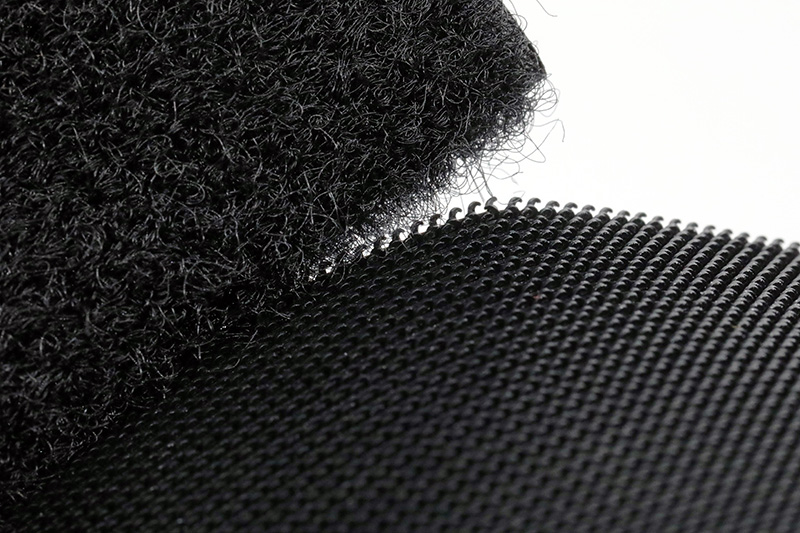 VZ-35 Nylon Injection Extra Strong Hook and LoopA molded nylon hook fastener for repeated-open closures where strong snap-on force, tough performance, and predictable holding are required.View Product → is aimed at exactly this kind of repeated-open application where holding force needs to stay predictable.
Where It Falls Short
- Lower peel than an aggressive hook, so it is a poor match for a stiff, low-loft loop that offers little fibre height.
- Contamination sensitive: dust, sand and loose lint fill the space between caps and reduce grab faster than they affect open hooks.
- Higher tooling and minimum order investment, which rarely pays back on a small accessory programme.
- Not a structural fastener: neither system should be asked to carry a load that a mechanical fixing should take.
- Heat and humidity can soften polypropylene caps, so specify nylon if the part will be washed hot or stored warm.
Buyer Checklist Before You Order
Fix five numbers before tooling: head geometry, engagement force, peel and shear strength, cycle life, and the exact substrate the part will touch. Every one of them shifts when the loop changes, so test on the production fabric, not on a lab swatch.
- Stem height, cap diameter and stems per square centimetre, with a drawing tolerance, not just a photo.
- Peel and shear values measured to a stated method and peel angle, on the named loop.
- Cycle target, for example 1,000 or 5,000 open-close cycles, with the acceptance limit for holding force afterwards.
- Backing specification: woven, nonwoven or film, plus coating if the part will be sewn or welded.
- Colour, width and length tolerances, because cut edges and shade variation are the usual complaint at incoming inspection.
- Test reports per batch, covering peel, shear and, where relevant, flammability or tear resistance.
If the part also has to survive rough handling, a tear-resistant construction is worth specifying at the sample stage rather than after a field failure. The 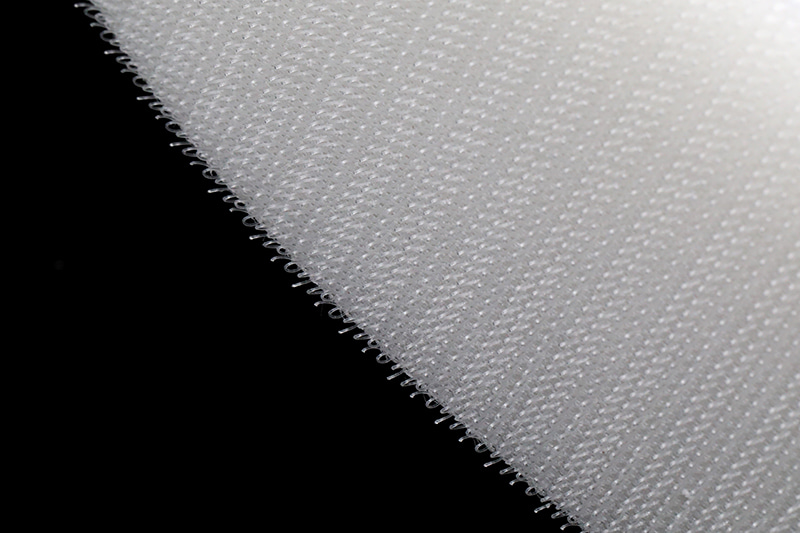 Resists Tearing Nylon Hook and Loop FastenerA tear-resistant nylon hook-and-loop option for rough handling and edge damage, with woven construction suited to grinding and similar uses.View Product → is built for that requirement, where the backing and the stem base both need to resist edge damage.
Frequently Asked Questions
Is mushroom velcro as strong as conventional hook and loop?
Usually close in shear, rarely equal in peel. On the same loop, a capped stem carries sideways load well but releases more easily when peeled at 90 or 180 degrees, so it suits closures that are loaded in shear rather than pulled apart.
Is it really quieter?
Yes, and the substrate matters more than the tape. Noise comes from fibres breaking and hooks snapping; a capped stem breaks fewer fibres, so the difference is obvious on soft loops and narrower on stiff, coarse nonwovens.
Will it damage fleece or fine knits?
Less than a standard hook, not zero. Fibre pull still occurs on very loose knits and on brushed surfaces with long pile, so run an abrasion and pilling check on the actual fabric before approving the part.
Can mushroom tape be sewn or welded?
Yes, if the backing suits the process. Sew along the backing edge rather than through the active cap area, and choose a nylon grade when the part will be high-frequency welded, since polypropylene does not weld reliably in that process.
Does mushroom tape work with standard loop?
Loop-engaging grades do, but engagement force will differ from the loop the supplier validated. Self-mating grades will not grip a loop at all. Always confirm which family you are buying before comparing samples side by side.
The practical summary is simple: mushroom velcro trades some peel grab for a gentler, quieter and longer-lived closure, and it earns its higher tooling cost on delicate fabrics and high-cycle products. Specify the substrate, the cycle count and the release feel together, and the geometry choice makes itself.



