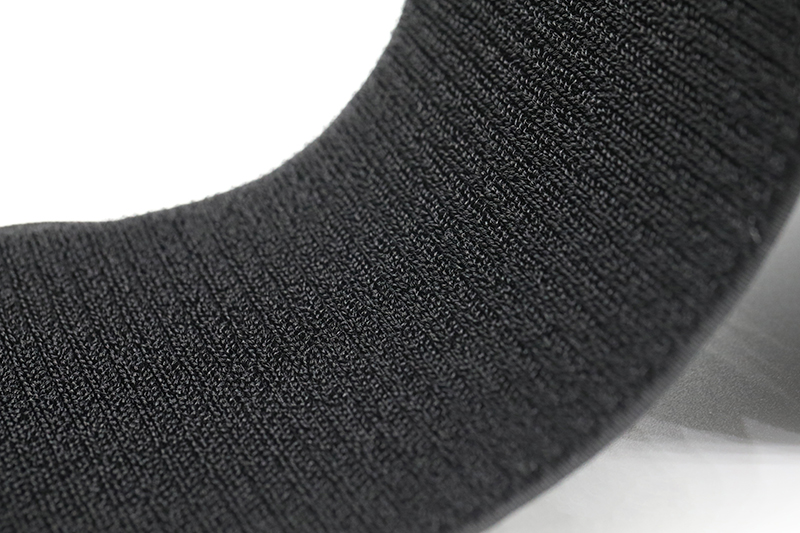
A loop material fabric is the pile side of a hook and loop closure: a knitted or woven backing that carries thousands of small arches a hooked tape can catch and hold. It is the soft half, the surface that feels like felt, and it governs most of what users actually notice about a closure — peel strength, cycle life, and whether a strap feels soft or scratchy against skin.
The loop deserves more attention than most specification sheets give it. Hook tapes are relatively standardized; loop fabrics are not. Two swatches that look identical on a sample card can differ by three times in peel strength and by an order of magnitude in cycle life once pile height, yarn denier and napping depth change. What follows covers how the material is built, how the main grades compare, where real assemblies fail, and what to write on a purchase order so the roll you receive matches the sample you approved.
Every loop fabric is four independent decisions: a ground structure, a pile yarn, an opening step, and a back treatment. Change any one of them and the closure behaves differently, even if the roll looks the same.
The practical point: when a closure feels stiff, weak or noisy, the difference is nearly always in the pile and the finishing step, not in the backing.
Peel strength is set mainly by how much pile volume a hook can engage, so loop height and pile density matter more than tape width alone. A taller, denser pile gives the hook more material to grab, which raises peel strength but also adds thickness, weight and cost, and can make a narrow strap feel bulky.
Three levers control the outcome, and they pull against each other:
Loop construction also determines which hook type will mate with it. Injection-molded hooks have thicker, more rigid stems and need a genuinely open pile; fine textile hooks engage short, tight piles that a molded hook would simply skate across. Testing a new hook against an existing loop, rather than assuming compatibility, avoids most of the surprises at this stage.
Loop styles differ less in appearance than in how much grip they return per unit of thickness. The table below ranks the common constructions on the criteria that decide most projects.
| Loop style | Pile surface | Peel strength | Cycle life | Typical application |
|---|---|---|---|---|
| Standard napped nylon loop | Open brushed arches | High | High, thousands of cycles | Apparel, bags, footwear, medical straps |
| High-density napped loop | Dense short pile | Very high | Very high | Safety gear, orthopedics, load-bearing straps |
| Unnapped (flat) loop | Loosely bonded flat loops | Moderate | Moderate | Lamination, low-profile closures, limited reclosure |
| Weldable nylon loop | Napped pile, heat-weldable back | High | High | Automotive trim, molded plastic parts |
| Flame-retardant loop | Napped pile with FR finish | High | High | Transport seating, protective and military gear |
Unnapped loop is the style most often misapplied. It is thin, stable and cheap to laminate, which makes it attractive for molded parts and disposable closures, but it returns noticeably less peel than a napped pile and wears out faster if the same joint is opened repeatedly.
Where a project needs lamination rather than sewing, an unnapped nylon loop is usually the right starting point — provided the closure is designed for a limited number of openings rather than daily use.
Pick the fiber by the environment the product will live in, not by habit. Nylon wins on abrasion and grip, polyester wins on UV and moisture, and blends trade a little of each for cost stability.
| Loop fiber | Abrasion and cycle life | Heat and UV | Moisture and washing | Where it fits |
|---|---|---|---|---|
| Nylon 6 | High; longest cycle life of the common fibers | Softens at high ironing temperatures; needs UV stabilization outdoors | Absorbs moisture, dries slower, washes well | Apparel, medical, bags, general closures |
| Nylon 6.6 | Very high | Better heat resistance than nylon 6 | Similar to nylon 6 | Automotive, industrial, high-temperature processing |
| Polyester | Moderate to high | Good UV stability, higher melting point | Low moisture pick-up, fast drying, low shrinkage | Outdoor covers, marine, wash-heavy products |
| Polypropylene | Moderate | Low melting point; avoid heat and hot ironing | Very low moisture absorption | Cost-driven, single-use and low-load closures |
| Nylon/polyester blend | Balanced | Depends on blend ratio | Moderate | General purpose and price-sensitive programs |
A nylon loop is the safe default when a closure is opened daily, because abrasion resistance is what limits cycle life in most products. A polyester loop is the better answer for awnings, marine covers or anything that spends its life in sunlight and repeated washing, where dimensional stability and UV resistance outweigh raw grip. Blended constructions exist mainly to hold a target price while keeping peel inside an acceptable band.
The full textile hook and loop range covers these three fiber families in the same construction, which makes fiber comparison straightforward: same hook, same width, same test method.
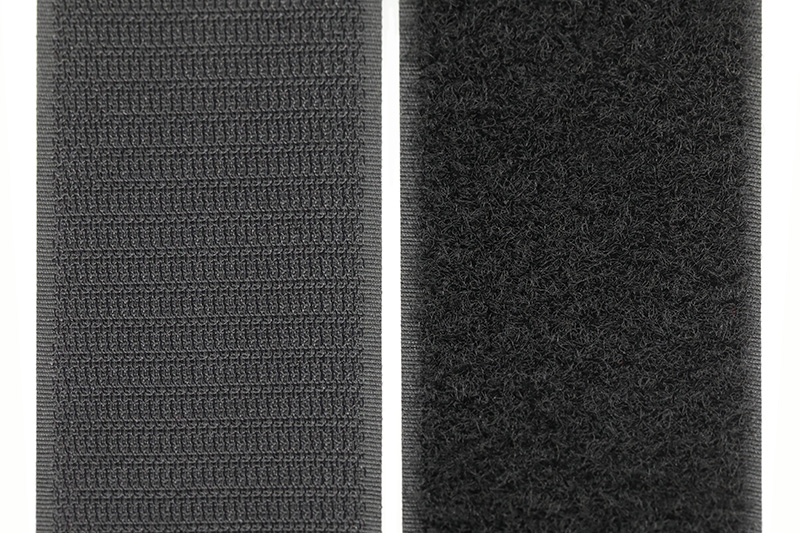 All Nylon Hook and Loop Fastener100% nylon textile fastener with smooth hooks and dense loops, suited to footwear cuff closures and side-by-side fiber comparisons at equal pile weight.View Product →
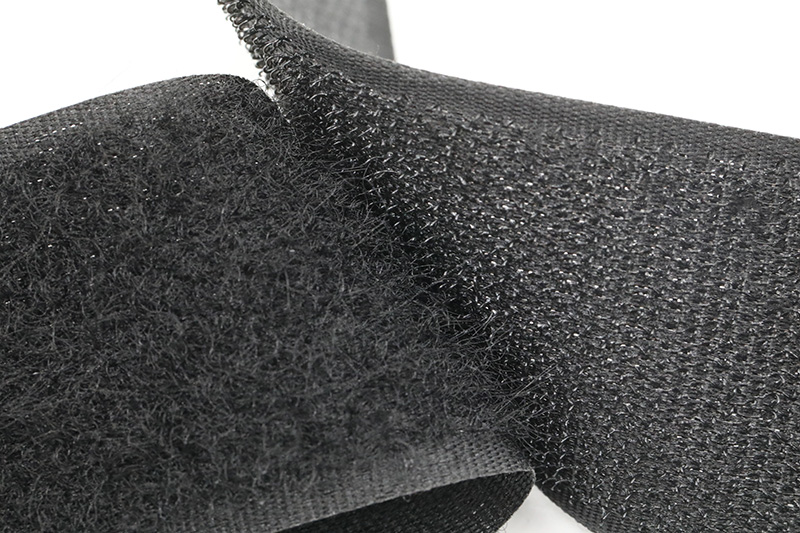 All Polyester Hook and Loop Fastener100% polyester fastener with a sparse, hard hand for large-area, low-frequency closure uses and cost-sensitive building-material applications; useful for fiber comparisons.View Product →
Sampling both fibers side by side at the same pile weight is the fastest way to see the difference in hand feel, peel and shrinkage after a wash cycle.
Most loop complaints trace back to one of five assembly problems rather than to the fabric itself. Checking these before a production run is cheaper than a field return.
A loop specification should be written as testable numbers, not adjectives. The list below covers the items that most often cause disputes between a sample and a bulk delivery.
Where a program involves several constructions at once, it helps to align the language across documents; this comprehensive guide to textile fasteners sets out the same terminology for hook tape, loop tape and finished closures. Suppliers with in-house peel, shear, fatigue, softness and high-low temperature testing can report against these clauses per batch rather than per season, which is what makes an incoming inspection routine actually work.
It is one half of it. Hook and loop tape consists of two separate fabrics: the hooked side with stiff monofilament stems, and the loop side with soft pile arches. Loop material can be bought on its own when the mating hook already exists in a design, or when the loop is bonded into a molded part.
No. Hook geometry and pile openness have to match. Injection-molded hooks need an open, taller pile, while fine textile hooks work with short, dense pile. Pairing a coarse hook with a low-profile loop raises initial peel but shortens cycle life sharply.
It can, especially knit-ground nylon. Uncontrolled shrinkage of 5 to 8 percent will pull seams and reduce the engaged area. Specify a pre-shrunk or heat-set loop with a stated shrinkage cap, and confirm it after the same wash cycle the finished product will see.
Napped loop has been brushed so the pile arches stand open, giving higher peel and longer cycle life. Unnapped loop is flat and low-profile, which suits lamination and thin closures but delivers lower peel and fewer reliable reopens.
It depends on pile density and hook type, but a good napped nylon loop paired with the right hook typically reaches several thousand cycles before peel drops below half its initial value. Products opened a few times a week need far less than daily-use straps and medical devices.
Yes, with a heat-weldable backing. This is common in automotive trim and molded plastic parts where stitching would show or weaken the assembly. Welded joints need a controlled temperature window, because overheating glazes the pile and permanently reduces grip.
Treat loop material fabric as an engineered surface rather than a commodity trim. Define the fiber, pile weight, width tolerance and peel target, test with the hook you will actually use, and check a production roll against the same clauses. That routine catches nearly every problem before it reaches an assembly line — and it keeps the closure feeling the same on the thousandth opening as it did on the first.



+86-13566080268
© 2024 Ningbo Veezot Technology Co., LTD. All Rights Reserved.China original production of hook and loop manufacturers Wholesale original production of hook and loop factory




 English
 Français