


 English
 Français


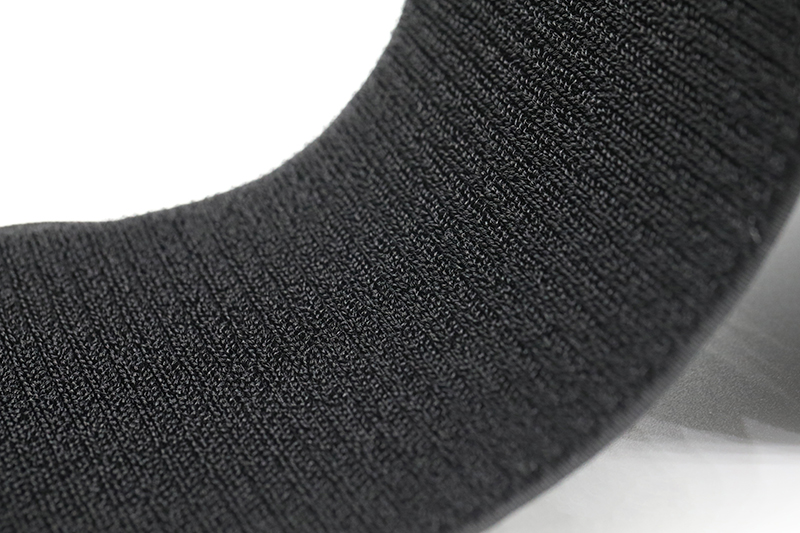
An unnapped loop is a loop tape whose pile has been left flat and as-woven instead of being brushed up into a raised, fuzzy surface. The trade-off is straightforward: unnapped loop gives you lower peel and shear strength, a thinner profile, and a noticeably longer open-and-close cycle life.
That single finishing decision explains most of the confusion buyers run into when two loop samples look identical on the data sheet but behave completely differently on the line. If you are holding two swatches and one feels soft and velvety while the other feels flat, tight and slightly stiff, you are almost certainly feeling the difference between napped and unnapped loop rather than a difference in yarn quality.
What "Unnapped" Means at the Loom
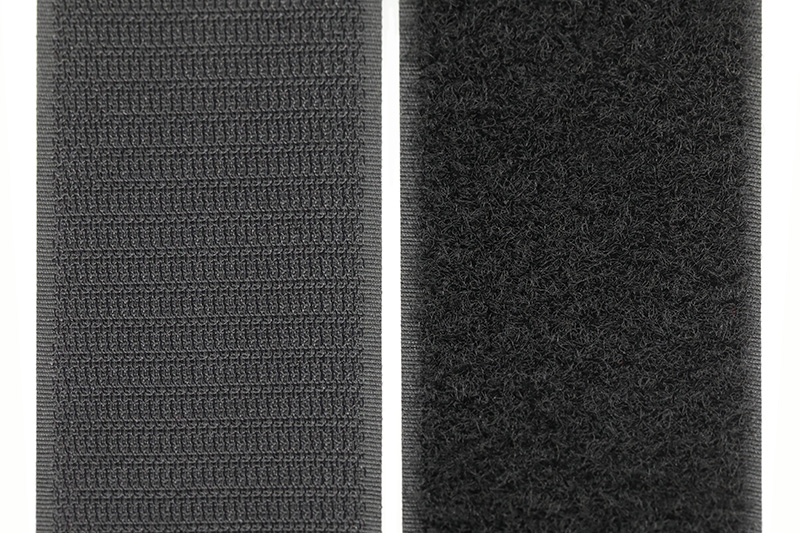
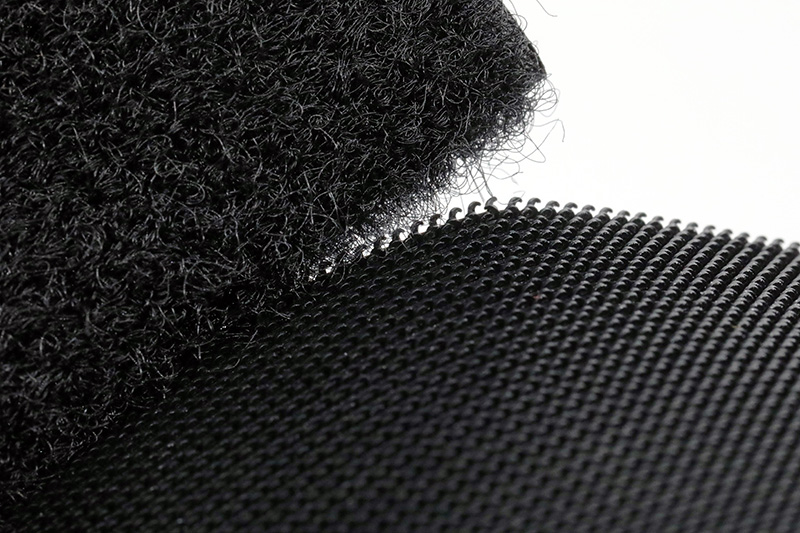
The word describes a finishing step, not a different weave. Hook and loop is a two-part closure: a hook tape with stiff monofilament hooks and a loop tape with softer multifilament loops. After the loop tape is woven, the mill can either leave the loops as they come off the loom, or pass the fabric through a raising process that pulls individual filaments up into a dense pile.
Same construction, different surface geometry
Because the base weave can be identical, fabric weight alone will not tell you whether a tape has been napped. What changes is thickness, compressibility, surface friction and the number of accessible fiber ends that a hook can catch. A napped face presents many fine filaments, so a hook grabs quickly and holds firmly; an unnapped face presents compact, upright loops, so engagement is crisper and the hook releases with less drag.
The difference also shows up downstream in converting. Napped tape is bulkier, sheds more lint when slit, and needs more care during adhesive coating because the pile absorbs adhesive. Unnapped tape cuts cleanly, sits flatter under a sewing foot, and fits into narrow gaps and low-clearance assemblies where a raised pile would bind.
Napped vs Unnapped Loop: What Actually Changes in Use
Choose unnapped loop when cycle count and dimensional consistency matter more than maximum holding force. Choose napped loop when a soft hand, generous peel strength and skin comfort drive the design.
| Property | Napped loop | Unnapped loop |
|---|---|---|
| Surface | Raised, dense fiber pile | Flat, compact as-woven loops |
| Peel strength | Higher | Lower |
| Shear strength | Higher | Lower |
| Open-and-close cycle life | Moderate | Higher |
| Thickness and profile | Thicker, compressible | Thinner, more stable |
| Hand feel | Soft, textile-like | Firm, slightly technical |
| Lint and fiber shedding | More | Less |
| Typical use | Braces, apparel, skin contact | High-cycle enclosures, industrial covers |
Do not treat "lower strength" as a small correction. When you swap a napped face for an unnapped one on an existing product, the closure rating you originally validated may no longer hold, because peel and shear both drop while the tape gets thinner and the engagement area changes. Peel is normally measured to ASTM D5170 and shear to ASTM D5169, but the method only helps if both the old and new samples were tested the same way, with the same hook, the same engagement length and the same loading rate.
Where Unnapped Loop Earns Its Place
Unnapped loop is the better specification whenever a closure is opened and reclosed many times, or when the tape has to sit inside a tight allowance. Common examples include:
- Access panels and equipment covers that are opened daily for service or inspection.
- Cable management, bundling straps and reusable wraps where the closure sees hundreds or thousands of cycles.
- Industrial and transport covers where lint shedding would contaminate a surface or a filter.
- Thin, low-clearance assemblies where a raised pile would create bulk or interfere with a moulded slot.
- Applications with heavy contamination, where a flat face is easier to wipe clean and traps less debris.
The lower peel can be recovered in design rather than in material: widen the closure, lengthen the engaged strip, or pair the flat loop with a more aggressive hook profile so engagement depth compensates for the reduced fiber contact.
Where Napped Loop Is Still the Better Specification
Napped loop remains the right answer wherever the closure touches skin or needs maximum grip on a short engagement area. Typical cases:
- Orthopaedic braces, supports and wearable medical devices, where a soft face prevents chafing.
- Apparel, uniforms and bags where the tape sits against fabric or the body.
- Short, narrow closures that must hold firmly with only a small overlap.
- Product categories where a textile hand feel forms part of the perceived quality.
For a same-material comparison of face finishes across yarn types, the textile hook and loop range shows how nylon, polyester and blended loop tapes behave before and after raising, which helps when you need to match a napped reference without changing the rest of the construction.
A Practical Specification Checklist
Four checkpoints settle most napped-versus-unnapped decisions before a sample ever reaches the line:
- Cycle count target. Estimate how many open-and-close cycles the product will see in service, then add margin for testing and returns.
- Required peel and shear. State both numbers with the test method, engagement length and hook used, otherwise the figure is not comparable between suppliers.
- Thickness and clearance. Loop tape is compressible, so a thickness figure means nothing without the measuring load; agree on the load and the tolerance band.
- Converting route. Sewn, welded, adhesive-backed or die-cut parts behave differently on a raised pile than on a flat one; confirm the route before locking the material.
If the closure must carry high shear in a permanent or semi-permanent joint, an injection-moulded hook paired with a flat loop often gives more consistent engagement than a textile hook on a napped face, because the moulded hook geometry is fixed and the loop does not compress away from it.
Sourcing, Cost and Lot-to-Lot Consistency
Unnapped loop usually costs less per metre because it skips the raising step, but that saving can be lost quickly through variation. Flat loop has nowhere to hide: a small change in yarn tension or loop height shows up directly as a change in peel strength, whereas a raised pile buffers minor weaving differences.
Three habits keep flat loop consistent across shipments. Ask for the finishing route in writing rather than assuming the sample you approved was unnapped. Request thickness at a stated load and a tolerance band, not a single nominal figure. And keep a retained reference swatch per lot so incoming inspection compares against a physical standard instead of a remembered feel.
For background on how loop height, pile density and backing choice interact with hook design, this guide to textile fasteners walks through the construction variables that most often cause a closure to underperform after a material change.
Frequently Asked Questions
Is unnapped loop weaker than napped loop?
Yes, in peel and shear. With the same yarn and backing, the flat face offers fewer accessible filaments for the hook to catch, so holding force drops. The compensation is a longer or wider engaged area and a longer cycle life.
Can we switch from napped to unnapped without retesting?
No. Peel strength, shear strength, thickness and engagement feel all shift, so the closure should be re-validated with the same hook, engagement length and test method used for the original approval.
Does unnapped loop work with any hook tape?
It works with standard woven and moulded hooks, but very aggressive hooks can over-engage a thin flat loop and accelerate wear. Match hook profile to loop height rather than assuming more aggression means more security.
Which face is better for medical and wearable products?
Napped loop, in almost every case. Skin contact and repeated adjustment favour a soft pile, and the higher peel keeps a short strap engaged under movement.
How do we tell napped from unnapped in incoming inspection?
Look at the surface at a low angle under good light and compare thickness at a fixed load. A raised pile scatters light and compresses visibly; a flat loop reflects light more evenly and holds its thickness. A retained reference swatch is more reliable than either test on its own.
Treat the loop face as a performance decision, not a cosmetic one. Cycle life, peel and shear values, thickness allowance and converting route all follow from whether the pile was raised or left flat, and those four factors are exactly what a closure specification is built on. Confirm the finishing route in writing, test against the hook you will actually use, and keep a reference swatch on file.



