


 English
 Français

Firefighter PPE gear is the complete set of personal protective equipment worn during structural firefighting and rescue: a certified helmet, thermal hood, turnout coat and trousers, gloves, boots, a self-contained breathing apparatus (SCBA), and a personal alert safety system (PASS) device. Under NFPA 1971, every garment item must pass strict performance limits, while the SCBA and PASS carry their own certification standards. Yet one small component connects nearly the entire ensemble — the hook-and-loop fasteners that hold cuffs closed, straps tight, and masks sealed.
A firefighter can don the full ensemble in under two minutes largely because these closures allow fast adjustment without laces, buckles, or metal hardware. When evaluating firefighter PPE gear, the coat, trousers, and SCBA receive the most attention, but the fastener system deserves equal scrutiny. A failed hook-and-loop closure on a glove or collar can compromise the entire thermal seal.
What Is Firefighter PPE Gear?
Firefighter PPE gear is an engineered protective ensemble designed to shield the wearer from flame, radiant heat, hot liquids, cuts, punctures, and toxic atmospheres while retaining enough mobility for aggressive firefighting work.
The structural turnout ensemble uses a three-layer design. The outer shell resists flame, abrasion, and heat; the moisture barrier blocks water and hazardous liquids while allowing sweat vapor to escape; and the thermal liner traps insulating air to slow heat transfer. NFPA 1971 sets minimum thermal protective performance (TPP) and physical strength values that a complete garment must meet before it can be certified as structural firefighting gear.
- The full PPE set combines head, body, hand, foot, and respiratory protection.
- Each structural ensemble piece falls under NFPA 1971, and NFPA 1851 governs cleaning and maintenance across the gear's service life.
- Fasteners are part of the certified system, so replacing them with non-approved components can invalidate compliance.
Core Components of Firefighter PPE Gear
Every component in a firefighter's ensemble protects a specific body region, and each carries distinct performance requirements under NFPA 1971.
| Component | Area protected | Key performance requirements |
|---|---|---|
| Fire helmet | Head and skull | Impact resistance, heat resistance, secure chin strap |
| Thermal hood | Face, neck, ears | Flame resistance, stretch, snug fit under helmet |
| Turnout coat and trousers | Torso, arms, legs | Three-layer system with outer shell, moisture barrier, thermal liner |
| Gloves | Hands and wrists | Cut, puncture, and heat resistance; flexible grip |
| Boots | Feet and ankles | Puncture resistance, slip resistance, electrical hazard protection |
| SCBA | Respiratory system | Positive-pressure air supply, facepiece seal |
| PASS device | Firefighter (alert) | Motion-activated alarm when firefighter is immobile |
Three connection points in particular — helmet liner straps, glove cuff closures, and collar flaps — depend on hook-and-loop fasteners for fit adjustment. Because these closures sit directly on the thermal protection path, their material and attachment method must not weaken the garment's NFPA 1971 rating.
Why Hook-and-Loop Fasteners Matter in Firefighter PPE
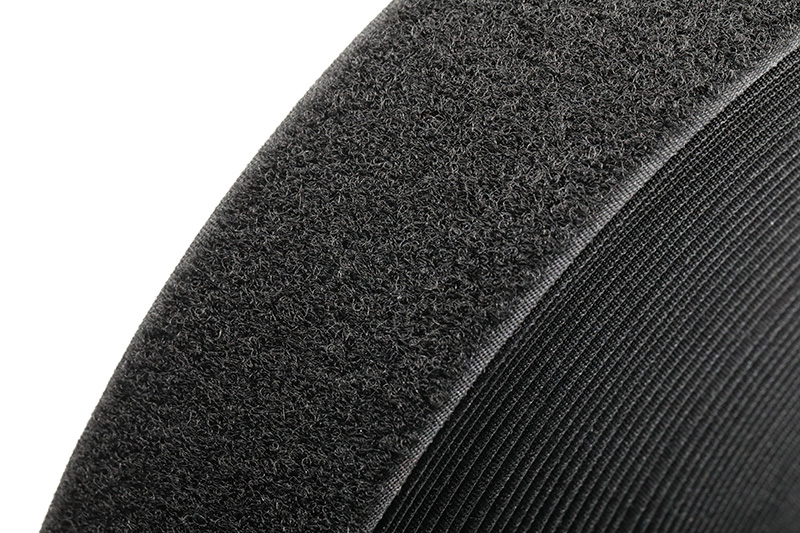
Hook-and-loop fasteners are the hidden workhorses of firefighter PPE, providing fast, adjustable, secure closure on helmets, collars, cuffs, trousers, and SCBA straps where zippers, buckles, or laces would slow movement or add metal hardware.
Fire crews open and close these closures repeatedly while wearing thick gloves. Hook-and-loop operates with a simple press, requiring no fine motor skills. It also distributes pull force across the full contact area, keeping the closure tight even as the chest expands during heavy breathing and hard physical effort.
- Helmet liner and chin-strap adjusters
- Collar flap closure on the turnout coat
- Wristlet and sleeve take-up straps
- Waist and fly adjustments on turnout trousers
- Glove cuff closures over the coat sleeve
- SCBA harness straps and facepiece retention bands
The same logic that drives you to verify the flame-retardant rating of the outer shell applies to the hook-and-loop closures touching that shell. Standard thermoplastic hook-and-loop can soften or lose grip under radiant heat; a well-made flame-retardant grade maintains closure integrity instead. For a closer look at how hook-and-loop tape is constructed and tested, see this guide to textile fasteners.
Performance Requirements for Fasteners in Firefighter Gear
Fasteners in firefighter PPE must survive flames, industrial washing, chemical exposure, and thousands of open-close cycles without losing shear or peel strength.
Four properties matter most when specifying hook-and-loop for firefighter applications:
- Flame resistance. The material should self-extinguish and must not melt or drip onto skin.
- Heat stability. Hook engagement must not relax after prolonged radiant heat exposure.
- Wash durability. Routine cleaning per NFPA 1851 means closures must retain grip through repeated industrial wash cycles.
- Cyclability. A glove or cuff closure is opened and closed hundreds of times per training day and deployment.
| Fastener type | Best-fit use | Advantage |
|---|---|---|
| All-nylon hook-and-loop | Liner retention, non-thermal straps | Flexible, cost-effective, high cycle life |
| Flame-retardant nylon hook-and-loop | Turnout coat collar, glove cuffs | Self-extinguishing, no melting drip |
| Injection-molded extra-strong hook-and-loop | SCBA straps, harness retention | High shear strength, resistant to lateral slip |
| High-frequency weldable hook-and-loop | Sealed seams and waterproof enclosures | No thread degradation, clean bond line |
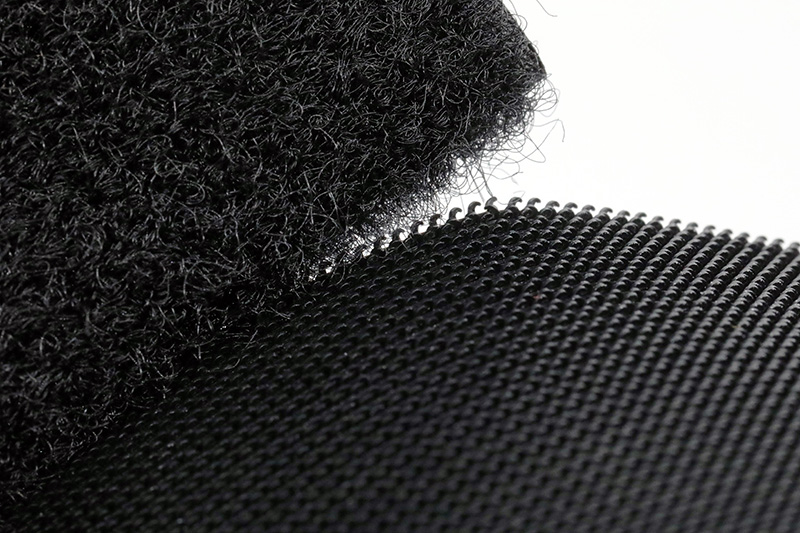
For high-stress strap points, injection-molded hook-and-loop delivers substantially higher peel and shear values than standard woven tape — an important margin when an SCBA harness carries the weight of air cylinders. The VZ-35 extra-strong hook-and-loop is designed for that kind of load path, offering a hook footprint that resists lateral slip without damaging the mating loop.
Manufacturing and Attachment Considerations
Attachment method decides whether a hook-and-loop closure survives the first wash or stays reliable for the gear's entire service life.
Three attachment methods dominate firefighter gear production:
- Sewing — the most common method, suitable for woven hook-and-loop; thread choice and stitch density must be specified for FR garments.
- Adhesive lamination — good for non-structural trim, but heat and washing can cause peel failure over time.
- High-frequency (RF) welding — fuses the hook-and-loop base into the substrate, creating a watertight, thread-free bond preferred in moisture barrier assemblies.
Welded hook-and-loop eliminates needle holes in the moisture barrier, and every needle hole is a potential leak path for water and bloodborne pathogens. High-frequency welding also speeds production and creates clean edges that do not fray. For manufacturers, it is worth requesting a weldable fastener grade and validating it on the actual laminate before mass production.
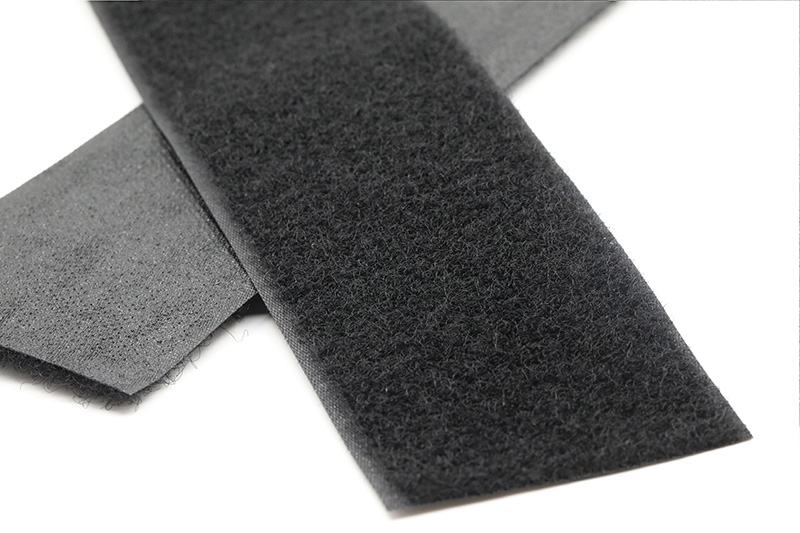
VEEZOT supplies weldable, flame-retardant, and extra-strong hook-and-loop options that can be certified as part of a compliant closure system.
Buying and Care Considerations
When buying firefighter PPE gear, verify NFPA 1971 certification on every component, confirm the flame-retardant rating of the hook-and-loop closures, and build a cleaning routine that protects fasteners from lint, debris, and heat damage.
- Ask the manufacturer for a test report covering the complete closure system, not just the shell fabric.
- Specify flame-retardant hook-and-loop on every closure that sits near a thermal edge.
- Check closure engagement visually: a strong, even grip across the strap width indicates consistent hook density.
- For departments replacing worn gear, measure the existing fastener dimensions and request an identical exchange to avoid fit mismatch.
Care matters as much as selection. Always close hook-and-loop before machine washing to prevent snagging. Inspect closures for melted hooks, embedded debris, or fabric pilling after each wash, and replace loose straps immediately. Departments that follow NFPA 1851 cleaning guidance typically see fastener performance hold through the gear's full retirement cycle.
Frequently Asked Questions about Firefighter PPE Gear
Here are the questions departments and gear specifiers ask most often about hook-and-loop fasteners inside firefighter PPE, answered directly.
Can hook-and-loop fasteners withstand the heat of a fire?
Standard hook-and-loop can soften and lose grip at elevated temperatures. Flame-retardant nylon grades use self-extinguishing chemistry and tighter thermal stability so they do not melt, drip, or open up under radiant heat. That said, the fastener still sits under the outer shell's protection; its job is to hold the closure without adding a weak link to the thermal path.
Why are hook-and-loop closures used on firefighter gloves?
Speed and dexterity. Gloves must slide on quickly during dispatch, and hook-and-loop permits one-hand adjustment even with thick gloves. It keeps the cuff snug over the turnout sleeve and avoids small buckles that snag in confined spaces.
How many open-close cycles can PPE hook-and-loop endure?
Quality woven hook-and-loop is typically lab-tested through 10,000 open-close cycles and must still hold a substantial share of its original peel strength. Injection-molded versions often perform better on shear loads. Field practice is to inspect closures each year and replace any strap showing weakened grip or visible hook deformation.
Can welding replace sewing for hook-and-loop on firefighter garments?
Yes, especially on moisture barriers and coated fabrics. High-frequency welding creates a hermetic bond, removes needle holes, and accelerates production. It is not suitable for every fabric stack-up, so a pilot run on the actual laminate should precede any specification change.



