


 English
 Français

Your product's closure can be the first thing a user touches and the first thing to fail in the field. Custom hook and loop fasteners solve this by letting you specify the exact material, strength, backing, and cut that match your assembly process and end-use environment. This guide covers what custom hook and loop means, the differences between fastener families, the key specification parameters you should define, and the questions to ask before you place an order.
What Is Custom Hook and Loop Fastening?
Custom hook and loop is a two-part closure system made from a hook side and a loop side, manufactured to your exact dimensions, materials, and performance requirements rather than sold as a standard off-the-shelf roll. When the two strips are pressed together, tiny hooks catch the fibrous loops and hold firmly until a sharp peel force releases them. This creates a reusable, adjustable, and easy-to-assemble fastening solution.
Standard hook and loop meets many general-purpose needs, but it only becomes custom when the supplier adjusts the yarn material, weave density, width, color, adhesive coating, or edge treatment to match your drawings or functional targets. For example, switching from nylon to polyester can improve UV resistance for outdoor gear, while a lower-profile hook geometry can protect sensitive fabrics in medical or baby products. If you are new to the construction details, our comprehensive guide to textile fasteners explains how the material is woven, tested, and specified.
Main Types of Custom Hook and Loop Fasteners
Custom hook and loop fasteners fall into three broad categories: woven textile hook and loop, injection-molded hooks, and specialty functional constructions. Each category brings a different balance of strength, durability, cost, and environmental compatibility, so selecting the right family is your first major decision.
Woven Textile Hook and Loop
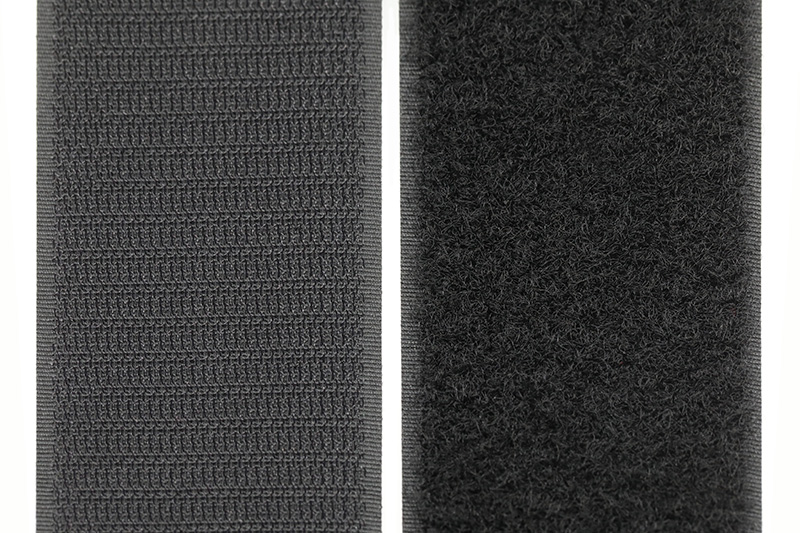
Woven textile hook and loop is the most common construction, produced by weaving fine nylon, polyester, or blended yarns on specialized looms. It offers a familiar hand feel and consistent performance across most consumer and industrial applications.
All-nylon versions are the standard choice when you need strong peel resistance, abrasive tolerance, and good shape recovery. All-polyester versions resist moisture, UV light, and chemicals better, making them popular in outdoor furniture, boat covers, and agricultural equipment. Blended weaves sit between the two, balancing material cost and functional performance. Custom orders can also adjust yarn density, finish, and backing to suit your sewing or lamination process.
Injection-Molded Hook and Loop
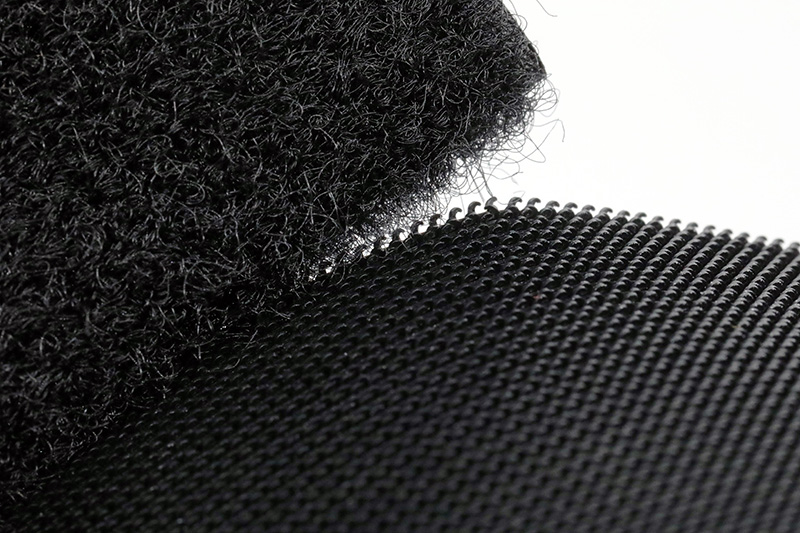
Injection-molded hook and loop is produced by molding PP or nylon hooks directly into a rigid or flexible substrate, creating a stiffer and stronger hook structure than woven constructions can achieve. This family excels in high-vibration environments, heavy-duty closures, and applications that require frequent open-close cycles.
Polypropylene (PP) molded hook and loop keeps cost lower and works well for standard fastening duties, while nylon molded variants tolerate higher temperatures and deliver extra grabbing force. The VZ-35 extra-strong nylon injection series is often selected for demanding industrial and tactical products where a few square centimeters of engagement area must hold a significant load. Injection-molded products are less likely to shed or pill under repeated use, which matters for automotive interiors and reusable tool wraps.
Specialty Functional Hook and Loop
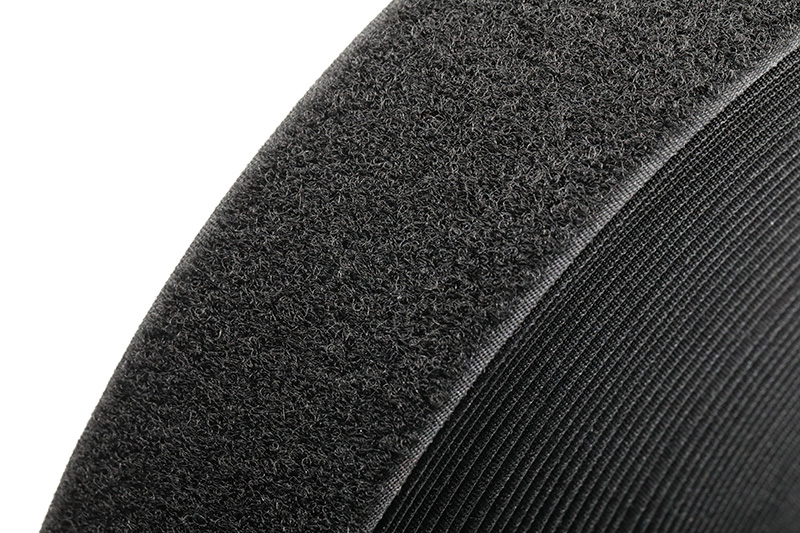
Specialty constructions add controlled properties such as flame retardancy, weldability, tear resistance, or self-fastening structures to meet unique regulatory or end-use conditions. These are not general-purpose parts; they are engineered for a specific failure mode or a compliance requirement.
Flame-retardant nylon hook and loop passes strict fire-safety standards for public transit seating, military equipment, and aerospace interiors. High-frequency weldable versions allow manufacturers to attach the fastener to fabric using dielectric welding instead of sewing or adhesive bonding, which saves labor and improves sealing. Self-fastening structures eliminate the loop pile entirely, letting the hook side engage directly with a companion fabric supplied by the customer. Baby hook products also belong in this category because their softer hook geometry is designed to minimize fiber damage and skin irritation.
| Type | Typical Materials | Strength Level | Environmental Resistance | Common Uses |
|---|---|---|---|---|
| Woven textile | Nylon, polyester, blended yarns | Medium | Depends on yarn; polyester resists UV and moisture | Apparel, bags, footwear, restraints |
| Injection molded | PP or nylon | High | Nylon tolerates heat; PP is economical indoors | Automotive, tactical gear, tool wraps |
| Specialty functional | Flame-retardant or treated yarns | Varies | Engineered for fire, chemicals, or extreme cycling | Aerospace, fire safety, medical, infant products |
Key Specification Considerations for Custom Hook and Loop
Five specification areas determine whether a custom hook-and-loop part will perform reliably in your product: material type, peel strength, shear strength, adhesive backing, and environmental tolerance. Nail these down early, and you avoid failures that only appear after production approval.
Material Selection
Material is the first decision because it drives strength, durability, regulatory compliance, and price. Choose nylon when you need abrasion resistance and general-purpose toughness; choose polyester when UV, moisture, or chemical resistance matters more; choose a blended weave for a cost-effective middle ground. For injection-molded parts, PP suits lower-cost indoor applications, while nylon suits higher-temperature and higher-stress conditions.
Peel Strength and Shear Strength
Peel strength measures how much force is required to separate the hook side from the loop side in a peeling motion, while shear strength measures resistance to sliding forces applied in the plane of the closure. Both values depend on the effective contact area, hook shape and density, and the fiber characteristics of the loop side, so the same hook-and-loop product can perform differently when you change the loop partner. When you request a custom design, give the supplier the contact area and the expected load direction instead of just asking for a total holding force.
Adhesive Backing Options
Adhesive backing simplifies assembly and removes the cost of sewing, but the adhesive system must match both your substrate and your production process. Acrylic pressure-sensitive adhesives cover most applications with good long-term aging; rubber-based adhesives offer aggressive initial tack but can soften at higher temperatures; weldable backings eliminate adhesives entirely by using heat or high-frequency radio waves to bond the fastener to a coated fabric. The wrong PSA on a low-surface-energy plastic can fail after weeks of storage, so always validate the assembly with prototype parts from the exact substrate.
Environmental Factors
Temperature, humidity, UV exposure, solvents, and repeated washing all affect the life of a hook-and-loop fastener. Nylon absorbs moisture and can loosen in humid environments, while polyester stays dimensionally stable and resists outdoor exposure. High heat can soften molded PP hooks or degrade standard acrylic adhesives, while flame-retardant constructions pass specific standards such as FAR 25.853 or equivalent national tests. If you are sourcing an injection-molded design for a demanding application, our technical guide for PP and nylon injection-molded hooks documents how process parameters and material choices affect final part performance.
Customization Options: Shapes, Colors, and Packaging
Suppliers can customize hook and loop beyond material and strength, including die-cut shapes, custom colors, printed branding, and packaging formats that feed directly into your production line. These options turn a generic roll of tape into a ready-to-install component.
- Shapes and cut tolerances: Circles, strips, rounded patches, tabs with alignment ears, and ladder-style buckles can all be die-cut from a wide master roll. Rounded corners prevent edge lifting and make the part feel like a deliberate component rather than a cut strip.
- Colors and printing: Standard color cards cover common brown, black, white, and olive shades; custom dye lots can match your product branding. Printing logos or part numbers on the loop surface helps with traceability and makes patches or closure tabs look finished.
- Packaging: Continuous rolls maximize material utilization; pre-cut strips reduce labor at the assembly station; kiss-cut parts with a release liner allow a single operator to pick-and-place the fastener without rework.
- Secondary processes: Slitting, folding, edge sealing, and ultrasonic cutting prevent unraveling and create a clean edge on highly cut shapes or low-gram-weight materials.
Common Applications for Custom Hook and Loop
Custom hook-and-loop fasteners support a wide range of industries, from high-volume consumer goods to low-volume specialty equipment where a closure failure would compromise safety or usability.
- Sports and military gear: Modular vests, helmet accessories, knee pads, and backpacks rely on hook-and-loop closures that stay locked under movement and vibration.
- Apparel and footwear: Shoe closures, jacket plackets, removable badges, and adjustable cuffs need reliable cycling that resists lint pick-up and washing damage.
- Electronics and wearables: Cable management straps, battery pack retainers, and VR headset padding fix soft components without adding rigid buckles.
- Furniture and interiors: Removable sofa covers, cushion anchors, and curtain ties depend on adhesive-backed hook and loop that keeps holding after years of seating pressure and occasional cleaning.
- Medical and infant products: Blood pressure cuffs, orthopedic supports, and baby accessories benefit from softer hook geometries that protect sensitive fabrics and skin.
- Transportation: Vehicle seat covers, carpet retention, and door panel wiring harnesses use high-strength or weldable hook and loop in heat-prone interior environments.
FAQ
What is the difference between hook and loop and conventional fasteners?
Hook and loop fasteners offer infinite adjustability, reusable engagement for thousands of cycles, and distributed closure force across the entire contact area instead of at discrete points like buttons or snaps. This makes them ideal for assemblies that require occasional repositioning, two-step release, or low-profile joining.
How many open-and-close cycles can a custom hook and loop withstand?
Quality hook-and-loop products usually endure thousands of engagement-release cycles, but the exact number depends on hook geometry, loop density, and operating conditions such as dust, moisture, or lateral abrasion. If the closure will be cycled repeatedly in service, tell the supplier the expected cycle count and request fatigue test data for the specific construction.
Can I have a custom logo printed on hook and loop?
Yes, printing or weaving logos into the loop surface is common for patches, labels, and decorative closures. The choice of printing method depends on your washing frequency, abrasion resistance, and required colorfastness, so review those details with the supplier before approving a decorative order.
What is the minimum order quantity for custom hook and loop?
Minimum order quantities vary by supplier and product complexity. Die-cut shapes made from standard materials may start at a few hundred pieces, while custom yarns, colors, or specialty flame-retardant treatments usually require larger volumes. Ask your supplier for a clear MOQ based on your part size, material, and finishing requirements.
Choosing the right custom hook-and-loop fastener starts by defining your application conditions and then translating those conditions into material, strength, backing, and shape specifications. A supplier with in-house manufacturing and testing capabilities can validate the choice before you commit to volume production. VEEZOT operates three production bases in China and runs fatigue, peel, shear, and temperature tests in-house to support custom orders across textile, injection-molded, and specialty hook-and-loop products. If you are developing a new product or replacing a closure that keeps failing in the field, contact VEEZOT with your application details and receive a proposal tailored to your requirements.



