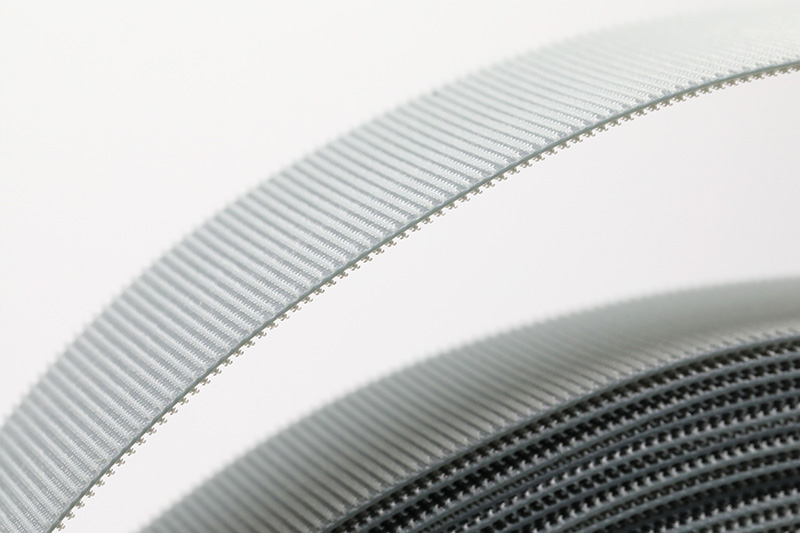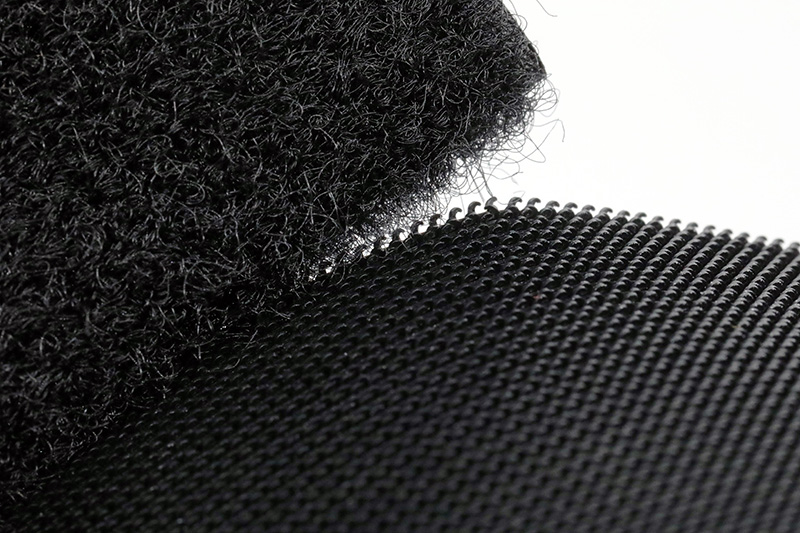
If your product will be opened and closed hundreds of times, molded hook deserves a close look. Molded hook is a hook surface produced by injection molding rather than by weaving or knitting textile fibers. Each micro-hook is formed in a precision mold cavity, so hook geometry stays consistent across the full roll.
The term belongs to the hook-and-loop fastening family. Buyers often say Velcro, but Velcro is a registered brand; the correct generic name is hook and loop. Within that family, two manufacturing routes compete. Woven hook-and-loop uses textile fibers that are woven and later cut into hook shapes. Molded hook starts with molten polymer that is injected into a mold, cooled, and released as a solid hook. This manufacturing distinction changes strength, flexibility, durability, and design freedom.
This guide covers the manufacturing process, material trade-offs, typical applications, and supplier criteria that matter before you commit to a molded hook purchase.
Choose molded hook when you need higher peel strength, consistent hook shape, and longer closure cycles. Choose woven hook-and-loop when softness, drape, and low-cost stitching matter more. The table below summarizes the most practical differences.
| Property | Molded Hook | Woven Hook-and-Loop |
|---|---|---|
| Manufacturing process | Injection molding of resin | Weaving or knitting of textile fibers |
| Hook body formation | Precision-molded plastic hooks | Cut and shaped textile fibers |
| Peel and shear strength | Higher and more consistent | Moderate |
| Cycle life | Longer under repeated open-close use | Limited by fiber fatigue |
| Surface feel | Smooth and dense | Soft and textile-like |
| Design flexibility | Mold controls hook shape and density | Constrained by textile process |
| Best-fit applications | Automotive, industrial, baby gear | Apparel, soft goods |
The main engineering advantage of molded hook is design control. Hook shape, height, density, and base thickness are defined by the mold, which makes performance repeatable batch after batch. Woven fasteners rely on cut fibers, so hook geometry varies more and repeated opening and closing wears the hooks down faster.
The trade-off is softness. Woven material lies flatter, drapes like fabric, and sews easily into garments. Molded hook is stiffer, which makes it a better fit for structural applications than for soft goods.
Because both technologies have valid roles, evaluate them side by side. VEEZOT produces woven all-nylon hook and loop for soft-goods applications. The same factory also maintains an injection-molded hook product lineup for structural requirements, which makes side-by-side evaluation under one quality system practical.
Manufacture of injection-molded hook begins with polymer pellets such as PP or nylon. The resin is melted under controlled temperature, then pushed into a mold roller filled with thousands of hook-shaped cavities. Cooling solidifies the hooks, and the continuous strip is peeled off the roller, wound, and slit to the requested width.
People often use injection molded and extruded interchangeably. True injection molding, where melt is pressed into closed cavities, provides better control of the hook tip. Dimensional accuracy of the tip directly controls how cleanly the hook engages with the loop side and how long the grip remains stable.
Four process variables determine quality: mold precision, resin temperature, cooling rate, and material purity. Each one is visible in the final peel strength and cycle life of the product.
Engineers who need deeper background on hook design and material parameters can read our in-depth guide to PP/nylon injection molded hook design.
Good molded hook performance is proven by testing, not by surface appearance. Three measurements matter most.
Temperature endurance and wash resistance are also specified in many programs. VEEZOT runs its own factory with fatigue testers, peel-and-shear machines, and high/low-temperature chambers, and applies incoming-material, in-process, and finished-product inspection.
Material selection starts with three questions: What temperature and humidity will the product face? How many cycles are expected? What is the target unit cost? From those answers, the material choice becomes straightforward.
Polypropylene is the cost-driven choice. It is lightweight, chemically resistant, and adequate for dry indoor conditions and moderate product life. For consumer products that need repeated but not heavy-duty opening, PP molded hook keeps unit cost down. The polypropylene double-sided hook and loop from VEEZOT is a typical example: the double-sided structure adds convenience, while PP keeps the material budget under control. The trade-off is lower resistance to heat and sustained heavy cycling.
Nylon is selected when durability and elastic recovery matter. It wears better, takes more cycles, and returns to shape more reliably than PP. Industrial enclosures, safety products, and heavy bags are the usual homes for nylon molded hook. One caveat is that nylon absorbs moisture, so high-humidity applications deserve engineering review. In demanding roles, the extra-strong nylon injection hook and loop from VEEZOT shows why nylon is preferred when pull-off forces are high.
Polyester is the choice for outdoor and wet environments. It withstands water, weather, and UV exposure better than PP or nylon, which is why marine and outdoor equipment use it extensively.
When standard chemistry cannot satisfy the specification, functional molded hooks step in. VEEZOT offers flame-retardant hook and loop options, plus high-frequency weldable and self-fastening versions for specialized assembly lines.
Molded hook appears in every industry that needs a secure but repeatedly openable closure.
Functionally, molded hook is chosen for three patterns: high peel strength for heavy fastening, high cycle life for frequent access, and low lint accumulation for cleanrooms and sensitive textiles. The smooth molded surface sheds far less fiber debris than woven material.
Selecting the right molded hook is an application-driven process, not a catalog match. The main parameters are hook shape and height, hook density (hooks per square centimeter), base thickness and stiffness, roll width, and the loop partner it will close against. A molded hook performs only as well as its loop partner, so test the hook with the exact loop tape you plan to use; a mismatch in loop height or density can cut peel strength dramatically.
A practical decision path has five steps:
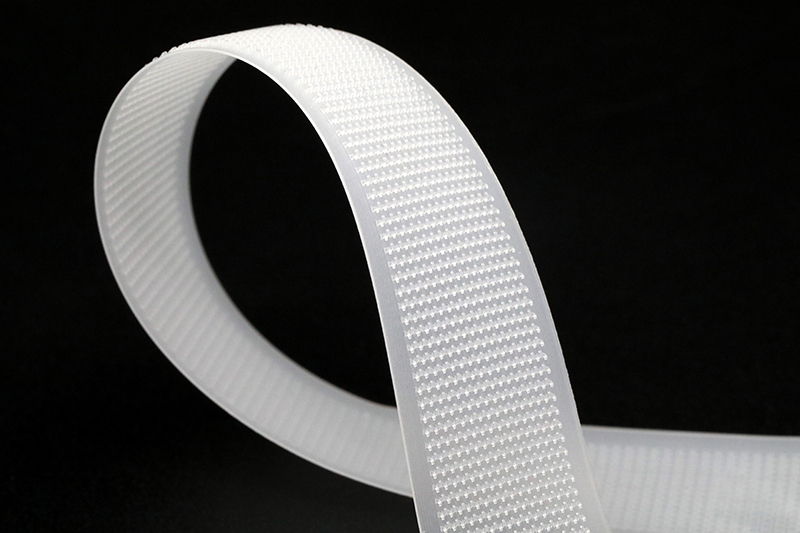 Wholesale VZ-Hook and Loop with Edge Supplier, Factory - Ningbo Veezot TechnologAs a China VZ-Hook and Loop with Edge supplier and factory, Ningbo Veezot Technology Co., LTD. specializes in providing ODM & OEM VZ-Hook...View Product → when sewing reinforcement is needed.
VEEZOT's product range follows this path. The lineup starts with standard PP and nylon molded hook, moves to heavy-duty and edge-reinforced constructions, and extends into flame-retardant and weldable options for demanding applications.
Technical knowledge narrows your options, but the final screen is the supplier itself. Four areas separate a reliable manufacturer from a trading intermediary.
Before sending your inquiry, prepare a short technical brief with the following points.
This brief forces your own team to define the requirement precisely, and it lets the supplier respond with the right samples and test data from the first exchange.
Molded hook is an engineered fastener, not a commodity. It wins on strength, consistency, and cycle life when the application asks for those properties. Selection should start from the use scenario: define the environment, set performance targets, match material, validate with samples, then evaluate suppliers on manufacturing depth and quality evidence.
VEEZOT is a credible candidate for that evaluation. The company operates its own plants, controls the process from filament weaving to finished hook-and-loop, and backs its molded hook with professional test equipment. That is exactly what a defensible sourcing decision should be built on.



+86-13566080268
© 2024 Ningbo Veezot Technology Co., LTD. All Rights Reserved.China original production of hook and loop manufacturers Wholesale original production of hook and loop factory




 English
 Français